


Thailand launched airstrikes against Cambodia on Monday, December 8, as a new wave of fighting erupted between the Southeast Asian neighbors, leaving a peace plan signed just two months ago, which was presided over by US President Donald Trump, in danger of collapse.
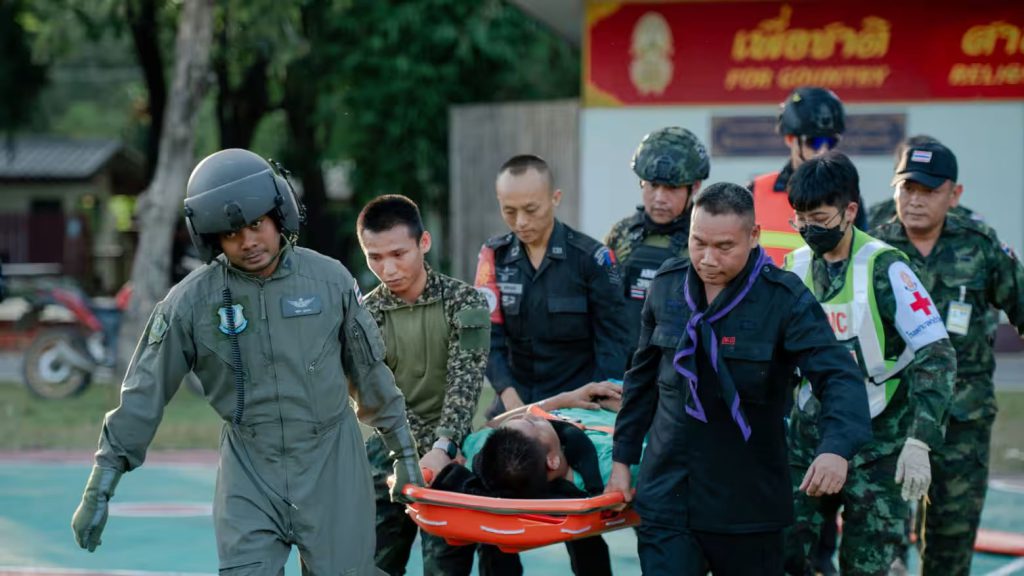
The escalation follows weeks of tension and the earlier suspension of progress on the ceasefire agreement by Thailand. The two nations have repeatedly fought brief border skirmishes in recent decades, with a deadly five-day conflict in July leaving dozens dead and displacing about 300,000 on both sides of the frontier.
Both sides accused the other of launching strikes along their disputed border in the early morning hours on Monday.
Thailand’s army claimed the airstrikes targeted Cambodian military infrastructure and were retaliation for an attack earlier that day that killed one Thai soldier and wounded several others. Army spokesperson Maj. Gen. Winthai Suvaree stated the target was at Cambodia’s arms supporting positions in the area of Chong An Ma Pass, and accused Cambodia of using artilleries and mortar launchers to attack the Thai side at Anupong Base. The Royal Thai Air Force (RTAF) called them activities that could escalate military operations and pose a threat to the Thai border area.
Cambodia’s defense ministry condemned the Thai strikes, insisting it remained committed to implementing the previous ceasefire. The Cambodian army accused Thailand of launching an attack on its forces at around 5:04 a.m. local time, noting this attack occurred after the Thai forces engaged in numerous provocative actions for many days. Spokesperson Maly Socheata later accused Thai forces of burning homes, causing injuries, and“prompting people to flee from border villages. Cambodia’s Minister of Information, Neth Pheaktra, confirmed that at least four Cambodian civilians have been killed and several others injured in the northern provinces of Oddar Meanchey and Preah Vihear.
Thailand’s Prime Minister Anutin Charnvirakul said the country “never wished to see violence, but would not allow the violation of its sovereignty.”
The initial ceasefire was agreed on July 28 after President Trump held calls with their respective leaders. Thailand and Cambodia then signed an expanded ceasefire declaration in Kuala Lumpur in late October in a ceremony witnessed by Trump and Malaysian Prime Minister Anwar Ibrahim.
However, less than two weeks after signing, the agreement began fraying after Thailand announced it was halting progress following a landmine explosion at the border that injured several Thai soldiers, a claim Cambodia denies.
Malaysian Prime Minister Ibrahim on Monday said he was deeply concerned by reports of armed clashes and urged restraint, warning that the renewed fighting risks unravelling the careful work that has gone into stabilizing relations.
Thailand began large-scale evacuations of civilians from affected border towns on Sunday, with about 35,000 people evacuated to shelters by Monday morning, according to its army.
The long-running territorial dispute largely stems from a 500-mile (800-kilometer) land border demarcation based on a map drawn up by the French when they controlled Cambodia as a colony, which Thailand does not accept.