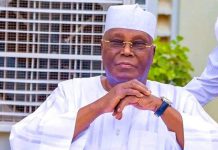


Governor Ademola Adeleke of Osun State has won the 2026 governorship election, securing a second term in office after defeating his closest challenger, Bola Oyebamiji of the All Progressives Congress (APC).
The Independent National Electoral Commission (INEC) declared Adeleke, who contested the election on the platform of the Accord Party, the winner after the final collation of results from the 30 local government areas of the state.
Adeleke polled 511,067 votes to defeat Oyebamiji, who secured 444,815 votes, giving the incumbent governor a winning margin of 66,252 votes.
The election was held on Saturday, August 15, 2026, as Osun voters went to the polls to elect the governor who would lead the state for another four-year term.
Adeleke’s victory means he will remain in office beyond the end of his first tenure, which began after his victory in the 2022 governorship election.
The election was closely watched because of the political significance of Osun State, particularly ahead of Nigeria’s 2027 general elections. The contest featured several political parties, although the major battle centred on Adeleke of the Accord Party and Oyebamiji of the APC.
Adeleke entered the election seeking to retain the state’s governorship after his first victory in 2022, when he defeated the then incumbent, Gboyega Oyetola.
This time, he successfully defended his position against the APC candidate, returning to the Government House in Osogbo for another term.
The result also represents an important political development for the Accord Party, which provided the platform on which Adeleke contested the 2026 election.
For the APC, Adeleke’s victory means the party has again failed to reclaim Osun State, despite its efforts to return the governorship to its fold.
Political analysts had viewed the election as an important test of political strength in the South-West and a possible indicator of voter sentiment ahead of the 2027 presidential election. However, analysts have cautioned against treating the Osun result as a direct prediction of the 2027 outcome, noting that governorship elections are often influenced by local issues, candidates and state-level political structures.
Adeleke’s victory is therefore expected to strengthen his political standing in Osun and reinforce the influence of his political structure ahead of the next general election.
The governor will now have another four years to implement his administration’s programmes and policies while addressing issues including infrastructure, education, healthcare, employment and economic development in the state.
For the people of Osun, the election has produced a clear outcome, with Adeleke retaining the mandate to govern the state.