


Previously unseen details from Jeffrey Epstein’s post-mortem examination, including graphic photographs taken shortly after his death, have been released by the United States government as part of newly declassified files.
The materials form part of a large batch of documents published on Friday by the US Department of Justice in the latest release connected to the late financier’s death in custody. Among them are 20 photographs, many considered too disturbing for public display, showing Epstein’s body lying on a stretcher while medics attempted to revive him.
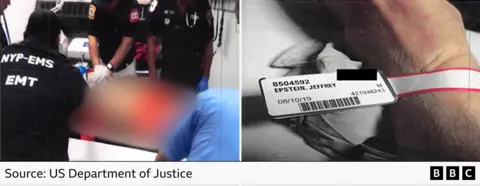 Epstein was found dead in his cell at the Metropolitan Correctional Center in New York on August 10, 2019, where he was being held on federal sex trafficking and conspiracy charges while awaiting trial.
The newly released documents include an unredacted 23-page FBI report titled “Jeffrey Epstein Death Investigation,” compiled by the bureau’s New York field office. Each page of the report carries an “unclassified” stamp. The files also contain a detailed post-mortem report and internal prison records relating to Epstein’s detention.
BBC Verify, which reviewed the documents, said the unredacted files show close-up images of Epstein’s neck with visible signs of injury. They also contain findings from his post-mortem examination and a psychology report detailing his mental state in the days leading up to his death.
Several of the photographs show Epstein on a stretcher as emergency responders worked on him. The images are timestamped 06:49 local time on August 10, around 16 minutes after he was discovered unresponsive in his cell. Although the exact location of the photos is unclear, records show Epstein was taken to a nearby hospital at 06:39, where he was later pronounced dead, suggesting the images were taken there.
Three additional photographs appear to have been taken inside the hospital and show close-ups of Epstein’s head and injuries to his neck. His name appears on each image, although in some it is misspelled as “Jeffery” rather than Jeffrey.
BBC Verify said it carried out reverse image searches on the newly released photographs and found no evidence they had been published online before January 30. The outlet also confirmed the existence of supporting documents within the release, including an 89-page post-mortem report prepared by the New York Office of the Chief Medical Examiner and emails from the FBI’s New York office containing the same images in redacted form.
The post-mortem report includes scans showing fractures to Epstein’s thyroid cartilage in his neck. The FBI report also provides a six-page timeline of Epstein’s detention, beginning with his arrest on July 6, 2019, and ending with his death.
According to the documents, Epstein was placed on suicide watch on July 23, 2019, after an earlier incident in which he was found injured in his cell. At the time, Epstein accused his cellmate, Nicholas Tartaglione, a former police officer facing murder charges, of trying to kill him.
A psychologist’s report included in the files states that during a meeting the following day, Epstein denied suicidal thoughts. He reportedly said he had “no interest in killing myself” and added that it “would be crazy” to take his own life. Two days later, on July 25, Epstein told the psychologist he was “too vested in my case to fight it” and said, “I have a life and I want to go back to living my life.”
Other documents released by the Justice Department indicate that the prison warden had advised Epstein should not be housed alone and stressed the importance of 30-minute cell checks and unannounced rounds by officers.
However, records show that Epstein’s cellmate was removed the day before his death. On the night of August 9, prison guards failed to carry out scheduled checks at 03:00 and 05:00, and surveillance cameras in the unit were not functioning. Epstein’s body was discovered during a routine morning check.
The document release also includes a second, shorter version of the FBI report, running 17 pages, in which key sections such as the psychological assessment and detention timeline are missing and all images are redacted. It remains unclear why both redacted and unredacted versions were included in the same batch of files.
The Department of Justice has been contacted for comment on the release. The FBI declined to respond.
Credit: BBC News