


The United States and Israel launched large-scale strikes on Iran on Saturday, escalating tensions across the Middle East. The attacks killed Iran’s Supreme Leader, Ali Khamenei, and targeted key military and political infrastructure.
Iran has since retaliated with missile and drone attacks across the region, expanding the conflict beyond its borders.
What Has Happened So Far?
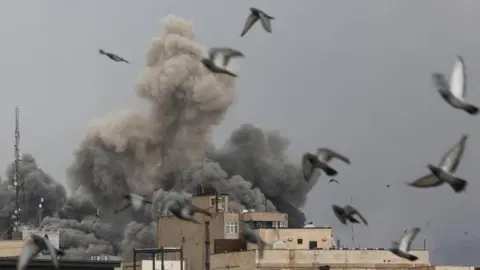
According to the Israel Defense Forces (IDF), the first wave of strikes targeted missile facilities, military installations, and senior leadership compounds in Tehran and elsewhere.
The US military said the operation, named Operation Epic Fury, was designed to dismantle Iran’s security and missile infrastructure.
Iran’s Revolutionary Guard Corps (IRGC) confirmed the deaths of several senior figures. A new IRGC commander-in-chief, Ahmad Vahidi, has reportedly been appointed.
Iran’s Iranian Red Crescent Society said hundreds were killed across more than 100 locations in the country. Internet access has been heavily restricted, and Iranian airspace remains closed.
On Monday, the United States Central Command (Centcom) said it had sunk 11 Iranian ships in the Gulf of Oman. US officials also confirmed American casualties, including six service members killed.
Why Did the US and Israel Attack?
US President Donald Trump said the primary objective is to prevent Iran from developing a nuclear weapon.
In a statement, Trump vowed to “destroy their missiles and raze their missile industry to the ground,” and warned Iran’s armed forces to stand down. He also called on the Iranian public to overthrow the clerical leadership.
Israeli Prime Minister Benjamin Netanyahu said the operation was necessary to remove what he called an existential threat posed by Iran.
Iran insists its nuclear programme is peaceful and have saidthe strikes are illegal and illegitimate.

How Has Iran Responded?
Iran has launched ballistic missiles and drones targeting Israel, Bahrain, Kuwait, Qatar, The United Arab Emirates, Saudi Arabia, Jordan, Cyprus, and Ships in and around the Strait of Hormuz
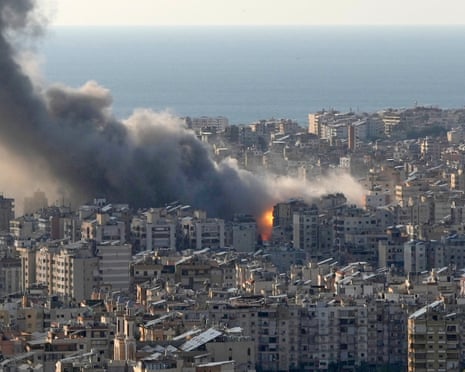
Lebanon’s Iran-backed militia Hezbollah has also joined the conflict, firing rockets into Israel. Israel has responded with airstrikes in Beirut and southern Lebanon.
The conflict has now spread into multiple theatres across the Middle East.
Economic Impact: Oil and Gas Prices Surge
The war is already affecting global energy markets.
Brent crude briefly rose above $80 a barrel.
Natural gas prices surged sharply after Qatar halted LNG production.
Several ships were attacked near the Strait of Hormuz — a crucial shipping route through which about 20% of global oil and gas supplies pass.
Instability in the Gulf has raised fears of prolonged disruption to energy exports.
Who Will Replace Khamenei?
Following Khamenei’s death, a transitional leadership council has reportedly been formed, including President Masoud Pezeshkian and other senior figures.
Under Iran’s constitution, a new supreme leader must be selected by the Assembly of Experts, a body of 88 senior clerics. However, the process may be complicated by the ongoing conflict.
How Long Could the War Last?
Trump has suggested that operations could continue for four to five weeks, but added that the US has the capacity to sustain military action far longer if necessary.
Netanyahu has said the campaign will continue “as long as it is needed.”
Analysts warn the conflict could escalate further, especially if:
Iran attempts to shut down the Strait of Hormuz
Gulf oil infrastructure is hit more severely
Hezbollah intensifies attacks from Lebanon
Wider regional powers become directly involved
Travel Disruptions
Thousands of flights have been cancelled across the region. Several countries, including Qatar, Iraq, and Jordan, have closed their airspace. Major airlines have suspended or rerouted flights to Gulf destinations.
Governments, including the US and UK, have urged citizens in affected countries to consider leaving while commercial routes remain available.
What Happens Next?
The conflict has already expanded beyond Iran and Israel, drawing in regional actors and affecting global markets. While US officials say the campaign is not intended to be endless, the risk of further escalation remains high.